
Japanese ramen comes in such a wide variety that it hardly seems like the same dish.
Shoyu ramen originated in Tokyo and is known for its light, clean flavor.
Tonkotsu ramen was born in Kyushu and features a rich, creamy pork-bone broth.
Miso ramen offers deep richness, while salt ramen is admired for its clear, beautiful broth.
Beyond that, each region differs in noodle thickness, toppings, and even how the ramen is eaten, making it truly a “traveling cuisine.”
Japan’s ramen culture goes beyond restaurants to include instant and cup ramen. In addition to classic flavors like soy sauce, miso, tonkotsu, and salt, there are regional specialties and collaborations with famous ramen shops.
Despite their convenience, these ramen are carefully crafted in terms of noodles, soup, and toppings, offering a surprisingly authentic taste. For international visitors, choosing ramen at a convenience store becomes a uniquely Japanese cultural experience.
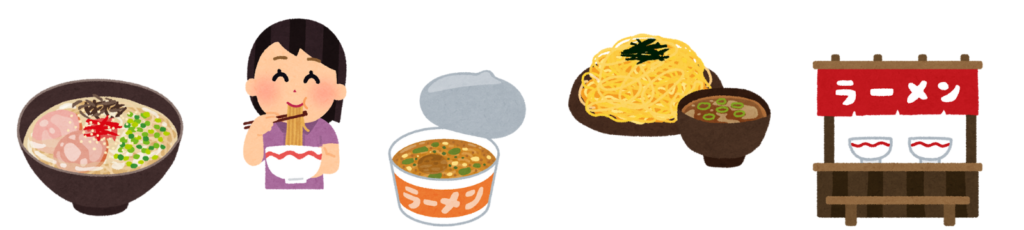
ラーメン文化の多様性
日本のラーメンは、同じ料理とは思えないほどのバリエーションがあります。
醤油ラーメンは東京発祥で、さっぱりとした味わい。豚骨は九州で生まれた濃厚スープが特徴。
味噌ラーメンはコクが魅力で、塩ラーメンは透明感のあるスープが美しいです。
さらに地域ごとに麺の太さ、トッピング、食べ方が異なり、まさに“旅する料理”。
日本のラーメン文化は、専門店だけでなくインスタントラーメンやカップラーメンにも広がっています。定番の醤油・味噌・豚骨・塩に加え、地域限定や有名店とのコラボ商品など、種類の豊富さが魅力です。
短時間で作れる手軽さがありながら、麺やスープ、具材まで細かく工夫されており、本格的な味を楽しめます。海外からの旅行者にとって、コンビニでラーメンを選ぶ時間も日本ならではの文化体験です。
Vocabulary
| 料理 (りょうり) | cuisine / dish Ex.:母は毎日おいしい料理を作ります。 My mother cooks delicious meals every day. |
| 発祥 (はっしょう) | origin この町は歴史が古く、江戸時代発祥の文化があります。 Ex.: This town has a long history and a culture that originated in the Edo period. |
| 魅力 (みりょく) | appeal / charm Ex.:この公園の魅力は自然が多いところです。 → The appeal of this park is that it has a lot of nature. |
| 透明感 (とうめいかん) | clarity / transparency Ex.:朝の空気は透明感があって気持ちがいいです。 → The morning air feels fresh and clear. |
| 地域 (ちいき) | region / local area Ex.:日本では地域によって言葉や習慣が違います。 → In Japan, words and customs differ depending on the region. |
| 体験 (たいけん) | experience Ex.:一人旅はいい体験になりました。 → Traveling alone was a good experience. |
| 専門 (せんもん) | specialized / specialty/special/ Ex.:彼女は法律の専門知識があります。 → She has specialized knowledge in law. |
| 限定 (げんてい) | limited / exclusive Ex.:このバッグは数量限定です。 → This bag is limited edition. |
| 手軽 (てがる) | easy / convenient Ex.:電子レンジで温めるだけなので手軽です。 → It’s easy because you just heat it in the microwave. |
| 本格的 (ほんかくてき) | authentic / full-fledged Ex.:このホテルはサービスが本格的です。 → This hotel offers authentic service. |

I love noodles, so I make sure to eat ramen once or twice a week.
Overseas, it’s common to relax and take your time at ramen restaurants, but in Japan it’s generally considered polite to leave your seat soon after finishing your ramen if there are only counter seats. Many ramen shops also use a ticket vending machine system, where you buy a meal ticket first and simply hand it over at the counter.
Let me introduce my favorite ramen restaurant!
Tokyo Aburagumi
This ramen restaurant serves abura soba, a type of ramen without soup.
It has a soy sauce–based flavor, and you can customize it with toppings like chili oil, vinegar, and raw onions. It’s truly delicious! Since it’s a chain with locations in many areas, be sure to give it a try if you come across one.
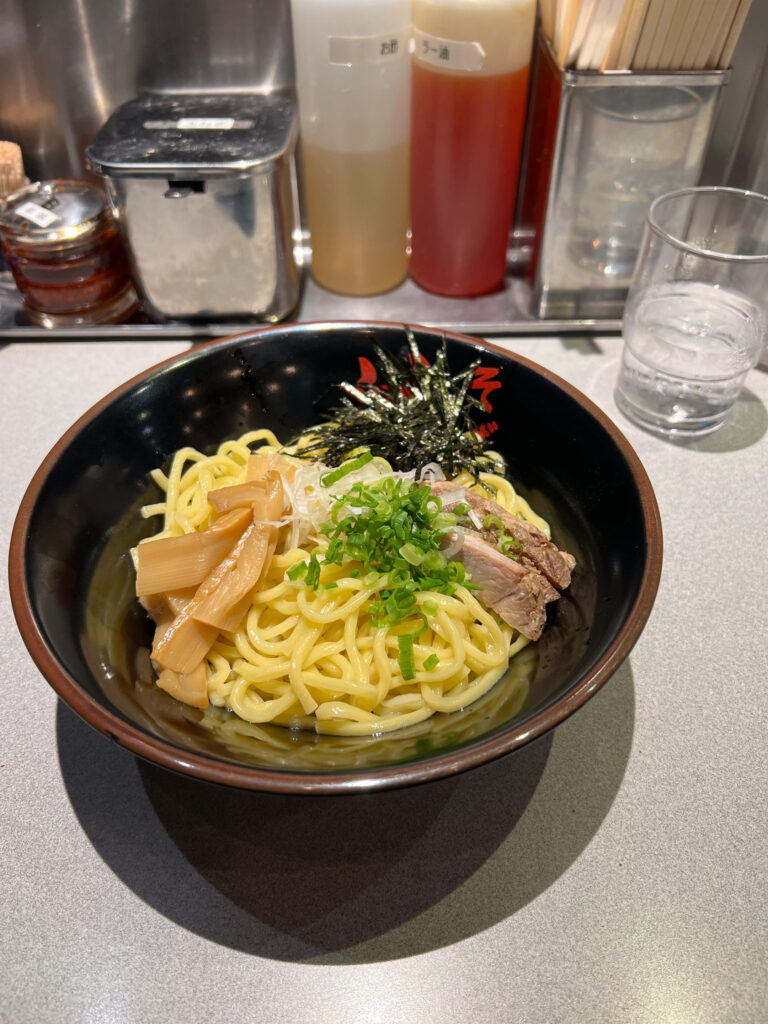
No matter which noodle portion you choose—「並盛り(regular size)」, 「大盛り(large size)」, 「W盛り (biggest size)」—the price is the same.
Be careful when buying your meal ticket.
My friend randomly pressed a button and ended up with the largest “W” portion, and apparently struggled to finish it.haha
コメント